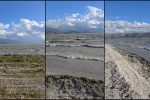
Following the Presidential Decision published in the Official Gazette dated November 14, 2026, which revoked Lake Eğirdir’s registration as a “Strictly Protected Sensitive Area,” Dr. Erol Kesici, Scientific Advisor to the Nature Conservation Society of Türkiye (TTKD), issued a written statement.
Pointing out that the lake’s water volume has decreased by 55 percent, Kesici emphasized that the decision will weaken the protective shield over the lake, while also warning citizens against parody posts circulating on social media claiming that the area “will become a dumping ground for foreign countries.”
The revocation of the January 5, 2021 decision designating the Lake Eğirdir Natural Protected Area—located within the borders of the Eğirdir, Gelendost, Senirkent, and Yalvaç districts—as a “Strictly Protected Sensitive Area” via Presidential Decision No. 11974, published in the Official Gazette No. 33430 on November 14, 2026 (Related news: Published in the Official Gazette: Lake Eğirdir’s “Strictly Protected Sensitive Area” Decision Revoked), has sparked significant reaction in scientific circles. Dr. Erol Kesici, Retired Faculty Member of Süleyman Demirel University (SDU) Eğirdir Faculty of Fisheries, Scientific Advisor to the Nature Conservation Society of Türkiye (TTKD), and Head of its Eğirdir Branch, published a comprehensive assessment issuing critical warnings regarding the decision.
“Water Volume Has Decreased by 55 Percent; the Lake Is Virtually Intubated”
Stating that turning back the clock for Lake Eğirdir is becoming more difficult with each passing day, Dr. Erol Kesici noted that over the past 35 years, the lake has suffered severe damage due to poor management, excessive agricultural irrigation, the construction of numerous ponds and dams around the basin, and illegal boreholes. Kesici recorded that during this period, the lake’s water level dropped from an average of 14 meters down to 913 meters—falling even below the 914.74-meter Critical Water Level specified in the Special Provisions for Lake Eğirdir—while its water volume decreased by 55 percent from 4 billion cubic meters to 1.8 billion cubic meters, and its average depth fell to 4 meters.
Emphasizing that increasing evaporation and pollution have destroyed the lake’s resilience and caused irreversible damage to its flora, fauna, and aquatic biodiversity, Kesici recalled that the “Strictly Protected Sensitive Area” decision of January 5, 2021, had been adopted precisely as a result of scientific studies aimed at preventing these ecological losses.
Is the Gelendost–Eğirdir Road Project Behind the Decision?
Pointing out that the “Strictly Protected Sensitive Area” status imposed protective restrictions on agricultural activities, drilling, mining pressure, water usage, and infrastructure projects along the shoreline, Dr. Kesici drew attention to the fact that no official justification has yet been announced regarding the November 14, 2026 revocation decision by the Ministry of Environment, Urbanization and Climate Change, the Ministry of Agriculture and Forestry, or local administrators.
Pointing to the 18-kilometer road project on the eastern side of the lake connecting the Gelendost and Eğirdir residential centers, Kesici stated that the biggest legal and administrative obstacle preventing this road from encroaching on the lakeshore was the 2021 protection decision. Expressing that the existing Gelendost–Eğirdir road is already a wide route providing adequate transportation provided traffic rules are obeyed, Kesici noted that scientific studies show the lake remains at a critical threshold, and summarized the dangers that removing the protection status will pose to the lake in the following words:
“Removing the Strictly Protected Sensitive Area status will weaken the protective shield over the lake, leading to greater pollution and the loss of its drinking water quality. Coastal pressure, nitrogen and phosphorus loads, frequent algal blooms, and oxygen depletion in the lake will increase; biological and ecological degradation as well as the risk of drying up will grow directly and more severely. Contamination of the lake, which meets the drinking and utility water needs of surrounding settlements—primarily Isparta—will not only increase drinking water treatment costs but also jeopardize food security.”
“Lake Eğirdir or a Road? Let’s Not Take the Easy Way Out; We Must Say Water First”
Stressing that under sustainable development principles, water—a vital necessity—and a road—an infrastructure service—cannot be compared as alternatives to one another, Dr. Erol Kesici stated that revoking the “Strictly Protected Sensitive Area” status aligns with neither international climate agreements, nor lake protection regulations, nor natural science.
Stating that with modern engineering and environmental planning capabilities, alternative routes or ecological crossing structures that do not harm the ecosystem can be built without lifting the lake’s protection status, Kesici included the following call in his statement:
“With its history spanning millions of years, the lake is a strategic source of drinking water that has shaped history, geography, life, and the economy. For the sustainability of the future, the priority approach must not be roads or mines, but rather water—the irreplaceable fundamental source of life—and its factory, Lake Eğirdir; in short, ‘water first.’ While we are failing to rehabilitate Lake Eğirdir and cannot find another lake to replace it, instead of lifting the lake’s protection status for an infrastructure service whose necessity is debatable, we must produce scientific and eco-friendly solutions. Let us not take the easy way out.”
Denial of Social Media Claims That It “Will Become a Dumping Ground”
Meanwhile, Dr. Erol Kesici also provided clarification regarding posts circulated on certain social media accounts following Presidential Decision No. 11974 in the Official Gazette, which falsely claimed that Isparta had been declared a waste and dumping ground for countries such as Botswana, Fiji, Kiribati, Guyana, India, Madagascar, and Palau.
Warning the public on the social media platform X by sharing the visual containing those claims, Dr. Kesici stated that such content does not reflect the truth. In his post, Kesici emphasized that misinformation should not be trusted, stating: “The post in the visual claiming it ‘will become a dumping ground for countries’ is unfounded and does not constitute real news. The post is fabricated/parody (troll) content taken from a social media account that shares humorous and satirical posts.”